

For the dedicated lifter over 30, the physique is a testament to discipline—low body fat, defined muscle, and relentless effort. Yet, a persistent, puffy appearance around the nipples or a firm lump beneath them can undermine that entire achievement. This is the silent frustration echoing across bodybuilding forums and men’s health communities: despite heavy benching, meticulous nutrition, and a shredded midsection, that stubborn chest tissue refuses to budge. The standard fitness advice of “build more chest muscle and lose fat” doesn’t just fall short; it often misdiagnoses the problem entirely. For the active, fit man, this isn’t a body composition issue—it’s a biological one, frequently rooted in hormonal history and tissue type that standard training protocols cannot touch. This article delves into why your hard work isn’t working and maps the realistic path forward.
The Invisible Failure: Why Chest Exercises Fall Short
Your bench press, dips, and cable flyes are engineered to hypertrophy skeletal muscle, not to remodel glandular tissue. True gynecomastia involves the development of firm, rubbery breast gland, a biological response to hormonal signals. This tissue is fundamentally different from fat or muscle; it does not metabolize in response to exercise. When you increase the size and thickness of your pectoralis major muscle underneath this established gland, you often achieve the opposite of your desired effect. The enlarged muscle acts as a platform, pushing the unyielding glandular tissue outward, making the contour more pronounced against your now-broader chest. This explains the pervasive online lament where lifters report their male gyno still there even though I lift heavy and eat clean at 35, witnessing improvement in every area except the one that feels most visible.

Understanding True Gynecomastia vs. Chest Fat
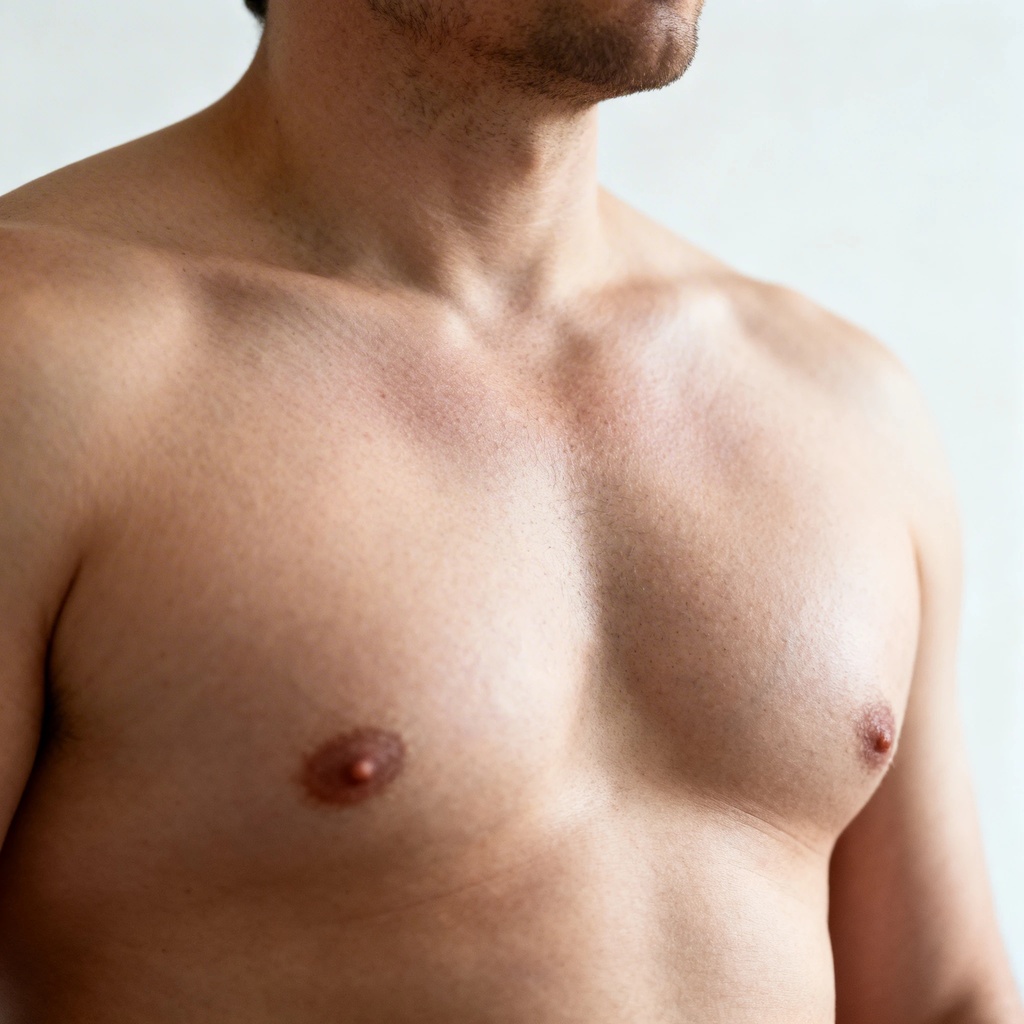
The first critical step is an accurate self-assessment, as the treatment paths diverge completely. Pseudogynecomastia refers to an accumulation of adipose (fat) tissue in the chest region. Because it is fat, it can—and will—diminish with a sustained caloric deficit and increased energy expenditure. True gynecomastia, the core issue plaguing many fit men, is the proliferation of actual ductal and glandular breast tissue. The tactile difference is key: glandular tissue feels dense, firm, and often disc-shaped, anchored directly under the nipple and areola. Fat is softer, more diffuse, and easier to pinch. If you’re lean with visible abs and vascularity but have this persistent, defined lump, you are confronting true glandular gynecomastia.
Glandular Tissue: The Biological Anchor Exercise Can't Lift
This tissue is not inert fat; it’s estrogen-responsive and structurally complex. Once formed and matured beyond a certain timeframe (often 12-18 months), it undergoes fibrosis—a process where the tissue becomes scar-like and permanent. No volume of push-ups or intensity of cardio induces apoptosis (programmed cell death) in this fibrous gland. Its presence is a monument to a past or ongoing hormonal event, not to your current workout regimen.
Hormonal Drivers in Active Men Over 30
The engine behind persistent glandular tissue is hormonal, but for the fit demographic, the causes are specific and often interlinked. General health articles cite puberty or obesity, but they miss the nuanced reality for the lifter. Let's explore some of the key hormonal factors at play.
For more insights, consider reading about Why do I feel invisible as a man.
Estrogen-Testosterone Ratio and the "Normal" Lab Trap
A standard blood test may return testosterone and estradiol levels within broad laboratory reference ranges. For the active man, especially one with a history of performance enhancement, this “normal” can be misleading. The critical factor is the ratio and, more importantly, local tissue sensitivity. Past anabolic steroid use can permanently alter the sensitivity of estrogen receptors in chest tissue. Even with blood levels now normalized, a minor estrogenic signal can be enough to maintain existing glandular tissue. Furthermore, intense resistance training and extremely low body fat levels can influence aromatase activity—the enzyme that converts testosterone to estrogen—creating a cyclical, self-perpetuating issue in susceptible individuals.
This can be further complicated by testosterone decline after 40.
The Legacy of Past Androgen Use
This is the most significant, and often unspoken, factor in the content gap. Compounds used in the past, particularly those that aromatize or act as prohormones, can initiate a gland growth phase. Even after cycles cease, the tissue that developed may not regress; it becomes fibrotic. This explains the relentless search for a male gyno protocol for bodybuilders after steroids. The tissue is a physical remnant, a scar of a past hormonal environment.
Age, Supplements, and Medications
Natural testosterone decline beginning in one’s 30s can subtly tilt the hormonal balance. When this is combined with legal supplements that impact hormone pathways (like certain natural test boosters, phytoestrogen-heavy products, or those causing significant water retention) or medications (e.g., for blood pressure, anxiety, or heartburn), the chest becomes the visual indicator of underlying hormonal friction. This confluence can trigger that confusing sudden gyno after starting serious gym routine over 30, where new dedication seemingly backfires.
It's important to understand how these factors interact and influence the condition.
What Chest Exercises Actually Do (and Don't Do)
It’s essential to reframe the purpose of your training with clear-eyed realism. Chest development exercises have one primary function: to stimulate growth and strength in the pectoralis major and minor muscles. They are spectacularly ineffective at spot-reducing any overlying tissue. This is a physiological impossibility. While building a thicker, wider chest can provide a better foundational shape if the overlying gland is later removed, during the active phase of gynecomastia, muscle growth often exacerbates the visual issue. The “muscle-under-gland” effect creates a more pronounced, shelf-like appearance. Cardio and diet will strip away subcutaneous fat, which, in cases of true gyno, can make the immutable glandular lump appear even more defined and isolated—the brutal answer to searches like "why do I have gyno puffy nipples despite low body fat reddit?"
Why Common Fitness Protocols Stop Working
The standard playbook for a fit man—aggressive cutting, increased HIIT, and focused chest hypertrophy—is designed for pseudogynecomastia. Applying it to true glandular gynecomastia is an exercise in frustration with a predictable outcome: no change. This protocol fails because it addresses the wrong tissue type. Dieting to extreme leanness removes the soft fatty camouflage, leaving the firm gland standing in stark relief. Doubling down on chest volume adds muscle underneath, pushing the gland further out. This cycle of effort and disappointment fuels the desperate forum posts from men asking, "does anyone else have gyno that won't go away no matter what I try forum." The gland is an independent entity, deaf to the calls of your macros and your training log.
It's crucial to consider all available options for managing this condition.
Scientific Evidence
Evaluating Your Management Pathway: A Realistic Comparison
For the active man dealing with this condition, understanding the landscape of options—their intentions, timelines, and limitations—is crucial. The following table outlines realistic approaches, not specific products or miracle cures.
| Approach | Best For | Timeline | Key Consideration |
|---|---|---|---|
| Lifestyle & Training Optimization | Pseudogynecomastia (fat-based) or very early, transient glandular development. | 3-6 months for observable fat loss changes. | Will not reduce established, fibrous glandular tissue. For true gyno, this is maintenance, not treatment. |
| Medical Hormone Management | Early-stage, proliferating glandular tissue (often less than 12 months old) driven by a current, identifiable hormonal imbalance. | Several months to assess response; often used as a diagnostic tool. | Limited to no efficacy on long-standing, fibrotic tissue. Requires specialist diagnosis and prescription. |
| Surgical Correction (Excision) | Established, persistent true gynecomastia with fibrous glandular tissue in men at or near their ideal body weight. | Immediate removal; 4-6 weeks for initial recovery; 3-6 months for final contour. | Permanent solution. Involves cost, recovery time, and finding a qualified surgeon. The only way to physically remove the gland. |
| Integrated Monitoring & Maintenance | Post-surgical patients or men managing a stable, minor condition while addressing underlying hormonal health (e.g., under TRT with medical supervision). | Ongoing, long-term lifestyle. | Focuses on preventing recurrence by managing hormonal drivers while maintaining physique through training. |
When to Seek Medical Help and Treatment Options
For the active man with persistent symptoms, professional medical evaluation is the definitive step. The clearest red flag is the presence of a firm, rubbery lump directly under the nipple/areola that remains unchanged despite achieving and maintaining a low body fat percentage. If this describes your situation, consulting a specialist is not an admission of defeat—it’s a strategic pivot to the correct tool for the job.
It's worth noting that why am I tired all the time even after sleep can also play a role in overall hormonal balance.
The Evaluation and Decision Pathway
A visit typically starts with an endocrinologist or a board-certified plastic surgeon specializing in male breast reduction. They will take a full history (be completely honest about any past supplement or steroid use—it’s medically vital), perform a physical exam, and may order blood work. Treatment then follows a logical tree:
- Watchful Waiting: Only appropriate for very new onset (less than 6-12 months) where spontaneous resolution is possible, such as from a medication side effect.
- Medication: Drugs like selective estrogen receptor modulators can be attempted in the early, proliferative phase to block estrogen’s effect on the tissue. Their success is highly time-sensitive and often minimal for the mature, fibrous tissue common in lifters over 30.
The use of androgen deprivation therapy can also have adverse effects, as noted in Adverse effects of androgen deprivation therapy and strategies to mitigate them.
- Surgery (Gland Excision with/without Liposuction): This is the gold-standard, permanent solution for established gynecomastia. The surgeon physically removes the glandular tissue. For those already lean, liposuction may be minimal or used only for contouring. This procedure directly addresses the problem exercise cannot: it removes the biological anchor.
Realistic Recovery for an Active Lifestyle
Post-surgery, a typical timeline involves wearing a compression garment for several weeks, avoiding strenuous upper body activity for 4-6 weeks, and a full return to heavy lifting after 6-8 weeks or as cleared by your surgeon. Patience here is non-negotiable; proper healing ensures optimal results and prevents complications like fluid buildup or contour irregularities.
The Integrated Path Forward: Adapting Gyno Management to Active Lifestyles
Moving forward requires a conscious decoupling of your fitness identity from this condition. Adopt a two-track mindset. Track One: Continue your training and nutrition for all the proven benefits—health, strength, mental clarity, and muscularity. See this as maintaining the excellent canvas. Track Two: Pursue a targeted medical or surgical consultation with a qualified professional. This is the action that addresses the flaw on the canvas. This integrated path means your lifestyle supports your overall well-being while your medical strategy directly solves the specific problem. It ends the cycle of frustration and aligns your actions with biological reality.
Understanding the available solutions can empower you to take control.
Frequently Asked Questions
A: If you have true glandular gynecomastia that has been present and stable for over 12-18 months, the tissue is likely fibrotic and permanent. No amount of diet or exercise will cause it to resolve. Continuing a healthy lifestyle is excellent for your overall health and physique but is not a treatment for existing fibrous glandular tissue.
Q: I’ve never used steroids. Could I still have this kind of persistent gyno?A: Absolutely. While past androgen use is a potent and common trigger, persistent gynecomastia can result from natural age-related hormone shifts, prescribed medications (e.g., for hair loss, prostate issues, or mental health), underlying conditions like liver or kidney disease, or even genetic predispositions. Being fit and lean does not grant immunity from these biological factors.
Q: Is surgery the only real option for someone who is already lean?A: For individuals with a low, stable body fat percentage and palpable, firm glandular tissue, surgical excision is typically the only way to achieve a permanently flat, contoured chest. Non-surgical interventions generally fail to affect this mature, fibrous tissue type. Surgery directly removes the physical problem.
Q: Will gynecomastia surgery affect my ability to build chest muscle in the future?A: No. A properly performed surgery removes only the glandular and fatty tissue above the muscle fascia. The pectoral muscles are left completely intact. Once fully healed (usually after 2-3 months), you can resume all chest exercises at full intensity. In fact, your muscular development will be visible for the first time without the overlying tissue obscuring it.
Q: How long after surgery until I can return to heavy lifting and my normal routine?A: A standard recovery protocol involves avoiding strenuous upper body exercise for 4-6 weeks. Lower body workouts and light cardio can often be resumed within 1-2 weeks. A full return to heavy compound lifts like bench press and weighted dips is usually cleared at the 6-8 week mark, but this must be confirmed by your surgeon based on your personal healing. Rushing this process risks complications and can compromise your final result.
📌 Love this guide? Save it on Pinterest!
Pin Gyno and Lifting After 30: Why Chest Workouts Aren't the Answer ( to your board so you can come back to it later.

