
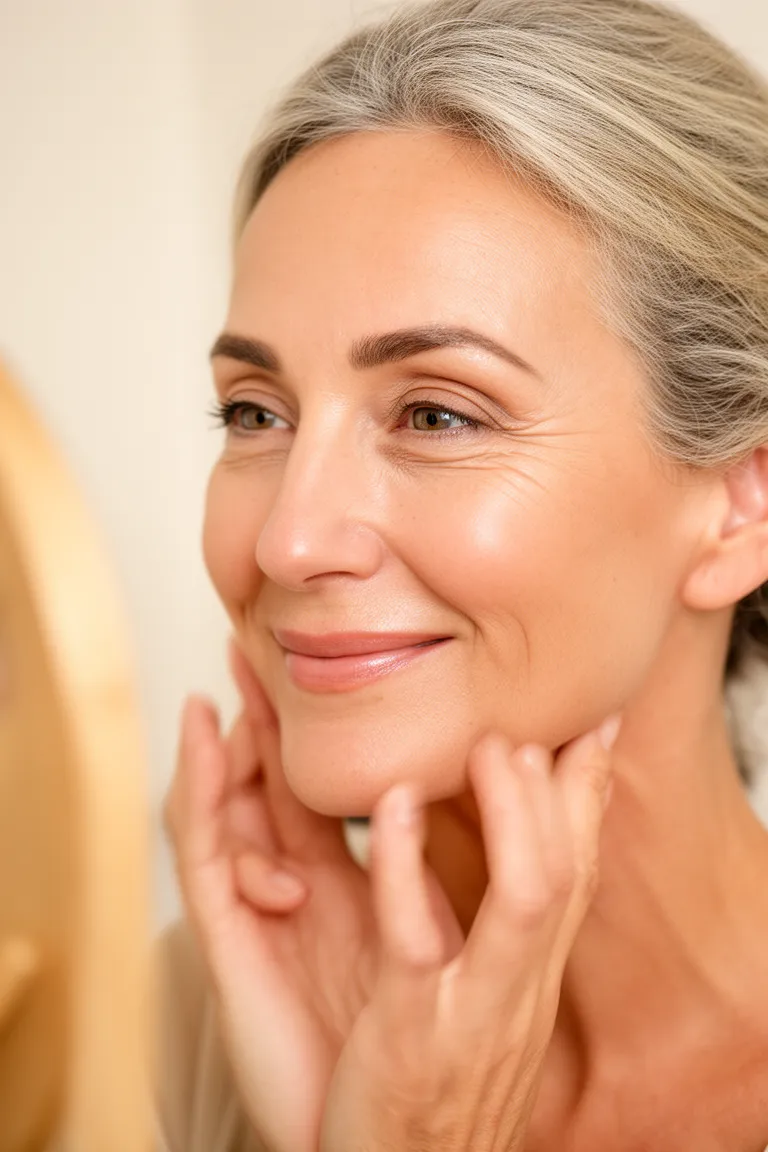
I remember the morning it hit me. I was in my bathroom, the same one where I’d performed my dutiful skincare ritual for years, and I gently pressed a finger against my cheek. Instead of springing back, the skin seemed to linger for a half-second before settling. It wasn’t sagging, not dramatically. It was a subtle loss of resilience, a quiet softening along my jawline that no amount of hydration seemed to touch. I looked at the lineup of expensive jars on the counter—the collagen creams, the firming serums, the miracle promises I’d cycled through. I felt a wave of pure frustration. I do everything right. I eat my greens, drink my water, slather on SPF 50 like it’s my religion, and get my heart rate up regularly. So why was my skin losing its fight?
For months, I chased the next big thing, each new product a little prayer in a bottle. I’d get excited by the initial plumping from a hyaluronic acid serum, only to have my reflection tell the same story by afternoon. I became skeptical, then almost resentful, of the entire skincare industry. The disconnect between my disciplined routine and the mirror was my private, confusing battle. I was the woman with the healthy habits and the inexplicably less-firm skin. That frustration, that feeling of doing the homework but failing the test, became my turning point. I realized I needed to understand the why before I could find the how. My journey to restore skin elasticity after 40 wasn’t about adding another step; it was about unlearning what I thought I knew and finally seeing my skin for what it had become, not what I wished it to be.
The Morning I Realized My Healthy Routine Wasn’t Making My Skin Firmer
The real issue wasn't a sudden collapse; it was a slow retreat I hadn't been equipped to notice. I could hydrate my skin to a dewy glow, smooth its texture with gentle exfoliants, and keep it clear. But firmness? That was a different conversation altogether. I had been treating all skin concerns as if they were the same—moisture-deficient. I didn't know how to distinguish dehydration, which is temporary plumping, from true skin laxity, which is structural. The emotional cost was real: I started to feel like my efforts were pointless, that aging was just an unstoppable force I had to accept with disappointment. It felt like a personal failure, a sign that my discipline wasn't enough. This is the core of why restoring skin elasticity after 40 when skincare is not working feels so defeating—you’re following the rules, but the game has changed without anyone telling you.
Why Disciplined Skincare Can Still Leave Visible Laxity
I thought if I was meticulous, I could outrun time. My routine was full of “good” things: cleanser, antioxidant serum, moisturizer, SPF. But I was mostly addressing the surface. I was keeping my skin clean, protected, and hydrated, which is vital, but I wasn’t actively speaking to the deeper layers where collagen and elastin live. It’s like diligently polishing and waxing a classic car but not addressing the engine wear underneath—it looks shiny, but it doesn’t run with the same power.
The Emotional Cost of Expecting a Routine to Reverse Aging
This was the silent toll. Every new purchase came with a flicker of hope that would inevitably dim. I’d scrutinize my face in different lighting, looking for a change that never came. It eroded my confidence not just in products, but in my own ability to care for myself. I felt foolish for spending the money and naive for believing the promises. Validating this feeling is crucial, because before you can build a new, effective approach, you have to release the guilt and frustration of the old one not working.
What Changes in Skin Elasticity After 40—and What I Had Been Misunderstanding
My first step toward a solution was to stop blaming my routine and start understanding my skin’s new reality. After 40, it’s not just about collagen declining (though it does, by about 1% a year). It’s a perfect storm.
Collagen, Elastin, and the "Scaffolding" Analogy
Think of young skin’s dermis like a brand-new trampoline: the collagen fibers are the strong, tight springs, and the elastin fibers are the bungee cords that let it snap back after a jump. After 40, some springs lose tension, some cords fray, and the whole structure gets a little looser. No amount of surface moisturizer can tighten those underlying springs. This is the fundamental shift. My focus had been on the canvas (the surface), while the frame (the scaffolding) was quietly remodeling itself.
Cumulative UV Exposure and Solar Elastosis
This was my biggest blind spot. Even with my daily sunscreen, decades of sun add up. UV rays create something called solar elastosis—a breakdown of those crucial elastic tissues deep in the dermis. It’s cumulative damage. So, while my daily SPF was preventing new damage, it wasn’t erasing the history already written into my skin. This explains perfectly why someone can have skin losing elasticity after 40 despite eating healthy and using sunscreen every day. You’re fighting yesterday’s battles as well as today’s.
Menopause, Falling Estrogen, and Increased Fragility
Then, for women, menopause enters the chat. It’s not just hot flashes. Falling estrogen levels directly impact skin thickness, moisture, and collagen production. Our skin can become drier, thinner, and more fragile almost overnight. Suddenly, my confusion made sense. I was hydrating the surface, but the scaffolding underneath was getting less support from my own hormones. Hydration can plump skin beautifully, but it can't rebuild the laxity in the architecture.
The Barrier Breakdown: Why My Skin Felt More Fragile Before Anything Else
Here was a subtle change I’d missed in my single-minded quest for firmness: my skin had become more reactive. A product I’d used for years would sometimes cause a flush. My complexion felt less resilient, almost like delicate paper instead of sturdy canvas. I learned this was my skin barrier whispering—and then shouting—for help.
With thinner skin and shifting hormones, our protective outer layer wasn’t as robust as it once was. I was so focused on anti-aging that I’d overlooked skin health. If the barrier is compromised, nothing you put on top—not the fanciest retinoid, not the most potent peptide—can work effectively. Your skin is too busy fighting irritation and inflammation to focus on long-term repair like collagen production. This foundational piece is what most firming routines gloss over in their rush to sell you an "active." I realized my skin needed to feel safe and strong before it could get stronger.
The Products I Stopped Chasing and the Ingredients I Started Using Consistently
I took a deep breath and cleared my shelf of anything promising “instant lifting” or “collagen infusion.” The constant product-hopping was a symptom of my panic. Instead, I built a simple, evidence-based routine around two pillars: unwavering protection and consistent, targeted support.
Daily SPF: The Non-Negotiable Foundation
The absolute cornerstone became a broad-spectrum SPF 30 or higher, applied every single morning, no exceptions. This wasn’t just prevention; it was active repair, stopping further solar elastosis in its tracks. It’s the most important step in any best skincare routine for loss of elasticity after 40. Without it, you’re trying to fill a bucket with a hole in the bottom.
Retinoids: The Gold Standard for Collagen
In the evenings, I introduced a retinoid slowly. This ingredient has the strongest evidence for actually stimulating new collagen production over time. I had to reframe it in my mind: it’s not an overnight fix, it’s a long-term investment in my skin’s infrastructure. does stretch mark removal cream help if I already eat healthy and moisturize daily
The Supporting Cast: Antioxidants and Peptides
I paired my retinoid with antioxidants like Vitamin C in the morning to mop up free radicals that break down collagen. I also incorporated peptides, which are like little messengers that help support the skin’s natural repair signaling. As for oral collagen supplements? The science shows they’re great for improving skin hydration and may give a subtle boost to skin density, but I stopped expecting them to reverse significant sagging on their own. They became a supportive player, not the star of the show. My routine became boringly consistent, and that was the point. I was no longer asking, “Am I wasting money on collagen products for skin firmness?” because I understood their realistic role.
Why My Skin Needed Barrier Repair Before More Powerful Actives
This was my biggest “aha” moment—and my hardest lesson. Desperate for results, I dove headfirst into a retinoid, using it nightly. Within a week, my skin rebelled with stinging redness, peeling, and tightness. I’d not only failed to improve firmness, I’d set myself back weeks by damaging my barrier further. I had to press pause completely.
The Reset Month: Cleanse, Moisturize, Protect
For a full month, I did nothing but gently cleanse, moisturize heavily with products containing ceramides, glycerin, and fatty acids, and protect with SPF. I was feeding my skin barrier the ingredients it needed to rebuild itself. It felt frustratingly passive, but it was the most active thing I could have done for my skin’s long-term health.
The Gradual Introduction
Once my skin felt calm, supple, and strong—like it could handle a conversation—I reintroduced my retinoid using the “sandwich method”: a layer of moisturizer, a pea-sized amount of retinoid, then another layer of moisturizer. I started with just twice a week. I learned that “active-stacking”—throwing every potent serum at the problem—always backfires. A healthy, resilient barrier is the essential gateway that allows actives to work without causing a riot.
Scientific Evidence
How I Learned to Work With My Skin, Not Against It
I made a profound mindset shift: I stopped seeing my skin as a problem to be fixed and started treating it like the changing, living organ it is. This meant looking beyond the bathroom cabinet.
Internal Support: Sleep, Stress, and Diet
I began to prioritize sleep and stress management, not as luxuries, but as non-negotiable parts of my skincare routine. Cortisol, the stress hormone, literally breaks down collagen. A bad night’s sleep showed up on my face as puffiness and a loss of that taut clarity. I also looked at my diet to ensure I was getting enough protein (the building block of collagen), Vitamin C (essential for collagen synthesis), and healthy fats. My approach transformed from an external assault to an internal-external partnership. This holistic mindset was the missing piece that transformed my results from frustrating to genuinely satisfying.
Choosing Your Pathway: A Realistic Comparison
Through trial and error, I learned that there are different pathways to improving skin elasticity, and choosing the right one depends on your starting point and expectations. This table helped me visualize my options and set realistic goals.
| Approach | Best For | Realistic Timeline for Visible Change | Key Consideration |
|---|---|---|---|
| Barrier-First & Prevention | Those with sensitive, reactive skin or who are completely new to actives. Focus is on repair and halting further damage. | 4-8 weeks for improved resilience, hydration, and calmness. | This is the essential foundation. You may not see "firming" yet, but you're building the capacity for it. |
| Topical Active Consistency (The "Gold Standard" Home Routine) | The person ready to commit to daily SPF and a consistent retinoid/antioxidant/peptide routine over many months. | 3-6 months for subtle but meaningful improvements in firmness, texture, and tone. | Patience and consistency are everything. This is a marathon that requires a healthy barrier to succeed. |
| Combined Topical & Professional Treatments | Addressing more pronounced laxity or wanting more significant results than topicals alone can provide. | Varies by treatment (e.g., radiofrequency, ultrasound). Some need a series; results develop over months. | An investment in both time and money. Works best on top of a solid at-home skincare foundation. Requires a consultation with a board-certified dermatologist. |
How Long It Took to Notice Better Firmness—and What Realistic Results Look Like
I had to ruthlessly manage my expectations. This was critical for my experience restoring skin elasticity after 40. After a few weeks of focusing solely on barrier repair, I noticed my skin was calmer, more hydrated, and had a smoother texture. That was encouraging, but it wasn't firmness.
The meaningful changes came with patience. I started to see a subtle tightening, a more defined contour along my jawline that wasn't just from hydration, around the 3-month mark of consistent, gentle retinoid use. By six months, the improvement was clear enough that a close friend asked if I’d “done something.” The key is understanding that how to improve skin elasticity after 40 naturally and realistically is a marathon. Creams cannot meaningfully lift established sagging; they can improve firmness, resilience, density, and tone. The goal shifted for me. It wasn’t to look 25 again. It was to have the healthiest, strongest, most radiant skin possible for 46. It was about restoration, not reversal.
When to Consider Professional Help
Part of my journey was learning to accept the honest limits of topical care—and seeing that not as a failure, but as a fact. No cream can replicate the focused energy of certain professional procedures. Once my skincare routine was optimized, consistent, and had done its best work, I could honestly assess what remained.
For deeper folds or significant laxity that truly bothered me, in-office treatments like radiofrequency, ultrasound, or laser therapies work at a different, deeper level. Consulting a board-certified dermatologist became a step of empowerment, not defeat. It meant I was taking a comprehensive, informed approach to my skin’s needs, using all the tools available wisely. It was the logical next step after mastering the fundamentals, not a replacement for them. best collagen cream with money back guarantee
Frequently Asked Questions

Q: How long does it really take to improve skin elasticity after 40 with a new routine? A: It completely depends on what you're using and the state of your skin barrier. Improved hydration and surface texture can show up in days to weeks. For ingredients like retinoids that work on collagen, you need to be patient for at least 3-6 months of consistent, uninterrupted use to see visible firming. True structural change is slow, which is why consistency is far more important than any quick fix. How long does it take to improve skin elasticity after 40 is a question of months, not weeks.
Q: I use sunscreen every day but still see sagging. Is it still helping? A: Absolutely, and don't you dare stop. Daily SPF is preventing further accelerated breakdown of collagen and elastin from UV rays (solar elastosis). Think of it as stopping the bleeding. The sagging you see is from past cumulative damage and natural aging. Your sunscreen is ensuring the problem doesn't get dramatically worse year after year, which is the crucial foundation for any repair work you do now.
Q: Are retinoids the only thing that can help restore skin elasticity after 40? A: They have the strongest evidence for stimulating new collagen production. However, they work best as part of a team. Antioxidants (like Vitamin C) protect existing collagen from damage, peptides support the skin's natural repair signals, and barrier-supporting ingredients (like ceramides) ensure your skin is healthy enough to tolerate retinoids and function optimally. It's a synergistic approach. Does retinol help restore skin elasticity after 40? Yes, significantly, but it's not a solo act.
Q: I have sensitive skin/rosacea. Can I still follow this approach? A: Yes, but with even more caution and potentially different actives. Barrier repair is your non-negotiable #1 priority—spend even longer on this phase. You may need to avoid traditional retinoids and opt for a gentler alternative like bakuchiol. Always, always introduce one new product at a time and patch test. Consulting a dermatologist is highly recommended to create a personalized plan that addresses firmness without triggering inflammation.
Q: Am I wasting money on collagen creams and supplements? A: Let's be realistic. Topical collagen molecules are generally too large to penetrate deeply into the skin where new collagen is made, so they primarily offer surface hydration—which is good, but not firming. Oral collagen peptides show more promise for improving skin hydration, density, and may support your body's own collagen production, but view them as a supportive player, not the star. Don't expect them to reverse sagging on their own. Invest first in a solid routine with SPF, retinoids, and barrier support, then consider supplements as a potential bonus, not the solution. skinception review before and after
📌 Love this guide? Save it on Pinterest!
Pin Restore Skin Elasticity After 40: My Realistic Journey in 2026 to your board so you can come back to it later.

