
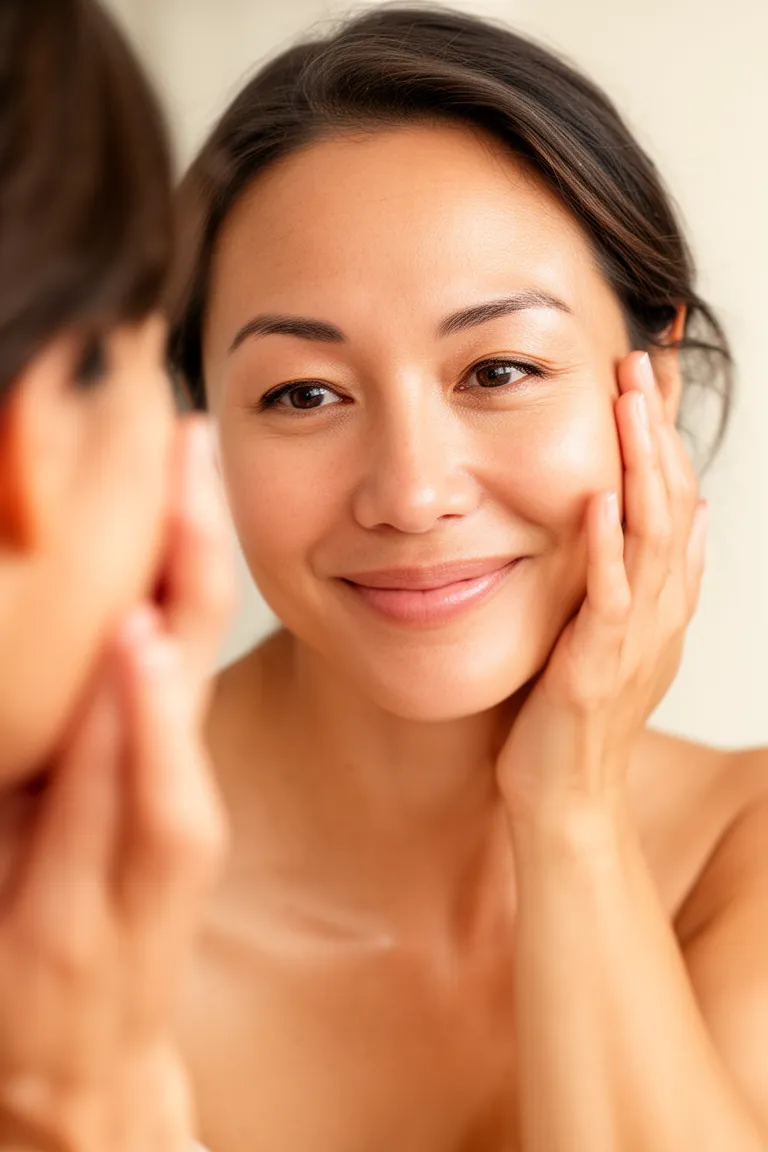
I did everything right. I’ve been a religious SPF 50 wearer since my late twenties. My diet is full of leafy greens and salmon, I drink a gallon of water a day, and I’ve never smoked. I’ve run half-marathons and prioritize sleep. So, when I started noticing a subtle but undeniable change in my skin a few years after turning 40, I felt a deep sense of unfairness. It wasn’t about wrinkles, really. It was about bounce. That plump, springy quality my skin had always possessed was quietly retreating. When I pressed my cheek, it didn’t snap back with the same cheerful resilience. It felt thinner, almost papery in places, and looked a little… tired, no matter how rested I was.
I’d stare in the mirror, genuinely perplexed. I’d followed all the rules. Wasn’t sunscreen and clean living supposed to be the ultimate shield? I felt a quiet frustration, a private disappointment that all my diligence hadn’t granted me a pass. I started to wonder if this was just an inevitable surrender, something every woman had to quietly accept. But a stubborn part of me refused to believe that. My journey to restore skin elasticity after 40 wasn't about chasing my twenty-year-old skin. It was about understanding what had shifted and learning how to genuinely support my skin in this new chapter. It turns out, doing "everything right" was a great foundation, but it wasn't the complete blueprint for midlife skin.
The Moment I Realized My Healthy Lifestyle Wasn’t Preserving My Skin’s Bounce
The realization didn’t hit me in a dramatic, single moment. It was a slow creep of evidence. It was the way my foundation would sometimes settle into fine lines I hadn't noticed before lunch, not as deep cracks, but as tiny, thirsty tributaries my skin couldn’t plump back up. It was the slight shadow under my jawline in certain lights that suggested a softness where there was once defined firmness, like the gentle deflation of a balloon days after a party. The real gut-punch came from a side-by-side photo. Comparing a picture from my 45th birthday to one from my late 30s, the difference wasn't in deep lines, but in the overall architecture. My face, for lack of a better word, looked less supported. The light didn't glide over the same rounded planes; it seemed to pool in new, subtle hollows. That’s when I had to confront the truth: my skin was losing elasticity after 40 despite my healthy lifestyle. The rulebook I’d been following was missing a few crucial, age-specific chapters.
Why Skin Can Lose Elasticity Despite Healthy Habits
Here’s what I had to learn the hard way: sunscreen and salads are incredible for prevention, but they are not an impenetrable force field against time. I was protecting my skin from new damage, but I wasn't actively addressing the cumulative toll of the past—those sunny college afternoons, the incidental exposure during school runs—or the natural biological slowdown happening inside. My healthy habits were like maintaining a beautiful, historic house perfectly: I kept the paint fresh and the gutters clean, but I wasn't reinforcing the aging wooden beams inside the walls. The structure was quietly changing, and my maintenance routine needed an upgrade.
The Difference Between Elasticity, Hydration, Volume, and Sagging
This was a key distinction I had to wrap my head around. When my skin felt dry, I’d slather on a rich cream and see a temporary plumpness. I confused that hydration with restored elasticity. Hydration is about water content in the top layers—it’s like spritzing a wilted plant. Elasticity is about the underlying network of collagen and elastin fibers—it’s the plant’s stem itself. Volume loss is about fat pads beneath the skin shifting or diminishing. Sagging is the visible result when that supportive network weakens and can’t hold everything up as firmly. I was treating the wilt (hydration) but not addressing the weakening stem (elasticity).
What Actually Changes Skin Elasticity After 40
My quest for answers led me down a rabbit hole of dermatology blogs and science journals. Here’s the humbling truth I had to accept: time and gravity are non-negotiable. But more specifically, our skin’s scaffolding—the collagen and elastin fibers that act like a supportive mattress—naturally begins to degrade and are produced more slowly. Think of it like a favorite sweater that slowly loses its knit over years of wear and washing. Even with sunscreen, decades of cumulative UV exposure (yes, even from my teenage years of baby oil and iodine) contribute to "solar elastosis," where elastin fibers become damaged and clumpy, like tangled rubber bands that have lost their snap. Functional integrity of aging skin, from cutaneous biology to anti-aging...
Furthermore, my skin barrier, that essential protective layer, was becoming more fragile with age, leading to increased moisture loss. So, my skin wasn’t just less elastic; it was also drier and more vulnerable, which exaggerated the appearance of laxity. It was a double whammy: the support beams were thinning and the outer wall was getting leaky. Understanding this was a relief. It wasn’t a personal failing; it was biology. This is why is my skin losing elasticity after 40 even though I use sunscreen—because sunscreen is crucial, but it doesn't undo past sun kisses or stop the internal production clock from slowing.
When Weight Loss or Hormonal Changes Contribute
For me, this wasn't a major factor, but in my research, I saw how it affects many women. Significant weight loss can leave skin without the underlying volume that once stretched it taut. And the hormonal rollercoaster of perimenopause and menopause? That’s a huge player. Estrogen helps maintain collagen and skin thickness. As levels dip, that support can drop off more steeply, sometimes making skin feel drier and less resilient almost overnight. It explained why some of my friends saw more dramatic changes than others, despite similar habits.
The Firming Products I Tried First—and Why They Disappointed Me
Armed with a vague understanding of "collagen loss," I did what many of us do: I went shopping. I invested in luxurious jars promising "lifting," "tightening," and "collagen-boosting." I tried collagen peptides in my coffee and elaborate 10-step routines. The initial results were often satisfying—a dewy glow, a temporary plumping from hydration. But after a few weeks, the fundamental lack of bounce remained. I’d wake up, my skin would look a little less “plumped” from the night cream, and the same softness was there. I was left feeling skeptical, wondering, am I wasting money on collagen products for skin elasticity? is firming skin treatment for women over 40 worth the money
The disappointment taught me valuable lessons. First, a rich moisturizer can fill out fine lines with hydration (like plumping a raisin), but it doesn't rebuild the underlying structure. Second, throwing every active ingredient (retinol, vitamin C, acids) at my face simultaneously irritated my now-delicate barrier, making my skin look red and crepey—the opposite of firm. I was confusing surface hydration with deep-seated elasticity. I learned that firming creams weren't working after 40 because I was using them as magic bullets, not as part of a coherent, supportive strategy.
Why Too Many Actives Can Worsen Irritation and Crepiness
This was my most painful lesson. In my zeal, I’d layer a vitamin C serum, a direct acid toner, a retinol, and a peptide cream, all in one night. My skin, which was already dealing with a weaker barrier, staged a full-blown revolt. It became tight, flaky, and oddly crepe-like—like tissue paper that’s been crumpled and smoothed out. I had sabotaged my own goal. I learned that a screaming, inflamed skin barrier cannot focus on long-term projects like building collagen. Its only job becomes crisis management. You have to calm the house before you can renovate the foundation.
The Turning Point: Shifting from Attack to Support
My "aha" moment came when I stopped focusing on "fixing" and started focusing on "supporting." I realized my primary job was no longer just prevention (sunscreen) but active, gentle reinforcement. The goal shifted to creating an environment where my skin could thrive and where proven actives could work effectively without causing rebellion. This meant prioritizing my skin barrier above all else. I pared back my routine dramatically, focusing on gentle cleansing, consistent hydration with ingredients like ceramides and glycerin, and unwavering sun protection. It felt boring compared to my previous arsenal of "miracle" products. But within a month, my skin felt calmer, stronger, and more resilient. It was the stable foundation I’d been missing.
The Simple Routine That Helped Me Restore Skin Elasticity
This is where the pieces finally came together. I built a minimalist, consistent routine based on evidence, not hype. It became my best routine to restore skin elasticity after 40, not because it was complex, but because it was sustainable and synergistic.
Morning: Gentle Cleanse, Antioxidant Armor, and Fortified SPF
My morning ritual is sacred and takes under five minutes. I cleanse with a gentle, creamy wash or just lukewarm water if my skin feels calm. Then, while my skin is still slightly damp, I apply a vitamin C serum. I think of this as my daily antioxidant armor—it helps neutralize free radicals from pollution and UV before they can chip away at my collagen, and it supports my skin’s own collagen production. After that sinks in, I use a simple moisturizer with ceramides or niacinamide to reinforce my barrier. Finally, the non-negotiable: a broad-spectrum SPF 50. I learned to be religious about reapplication if I was outdoors for more than two hours. This wasn’t just for the beach; it was for the grocery run, the walk with the dog, sitting by my home office window.
Evening: Cleanse, Repair, and Strategic Stimulation
The evening is for repair and renewal. I always double cleanse: first with a gentle oil or balm to dissolve sunscreen and makeup, then with a mild cream cleanser. This ensures my skin is truly clean without being stripped. On a damp face, I apply my treatment. But here’s the key—I don’t use the same one every night.
I slowly, carefully introduced two power players: a retinoid and a peptide serum. I started with a low-concentration retinol, applying it over my moisturizer (a technique called “buffering”) just one night a week. After a month with no irritation, I increased to two nights. This is the gold standard for encouraging collagen production. On alternate nights, I use a peptide serum. Peptides are like little messengers that tell your skin to get to work building supportive proteins. Some nights, if my skin feels sensitive or tired, I just use a rich, barrier-repairing moisturizer and call it a day. Listening to my skin became part of the routine. buy skinception online official store
| Approach | Best For | Realistic Timeline for Visible Change | Key Consideration |
|---|---|---|---|
| Barrier-Focused Foundation | Anyone starting out, or with sensitive, irritated skin | 2-4 weeks for improved comfort & hydration | Essential first step. Creates the calm canvas needed for actives to work. |
| Barrier Care + One Active (e.g., Peptides or Vitamin C) | Those new to treatments or wanting a simple, steady approach | 6-8 weeks for smoother texture, brighter tone | A gentle, effective way to begin supporting collagen without high risk of irritation. |
| Barrier Care + Retinoid Introduction | Those ready for the most proven collagen-booster, willing to go slow | 3-4 months for improved fine lines; 6+ months for firmness | Patience is non-negotiable. Start low, go slow, and always prioritize barrier health. |
| Combined Approach (Barrier + Antioxidant + Retinoid/Peptide Rotation) | Individuals with a resilient barrier seeking comprehensive support | 1-2 months for glow/texture; 4-6 months for firmness/elasticity | This is the "full blueprint" but requires consistency and listening to your skin's signals daily. |
How to Patch-Test, Reduce Frequency, and Avoid Retinoid Irritation
I learned this through a minor mishap. Before applying anything new all over, I now test it on a small patch of my jawline or neck for a few nights. When I started retinoids, I had a schedule: Monday night only. If my skin was flaky or red by Wednesday, I’d skip the next scheduled dose and just moisturize. The mantra became: “Slow progress is still progress. Inflamed skin is going backwards.” Using my moisturizer as a buffer was a game-changer—it didn’t reduce the retinoid’s long-term benefits, it just made the journey tolerable. how to reduce wrinkles naturally
Scientific Evidence
When to Expect More Hydration, Smoother Texture, and Firmer-Looking Skin
This was perhaps the most important lesson in patience. I had to recalibrate my expectations from "overnight lift" to "gradual improvement." The first changes were in comfort and hydration: my skin stopped feeling tight and parched within days of focusing on my barrier. After about 6-8 weeks of consistent retinoid use, I noticed a real improvement in texture—my skin was smoother, with a more refined pore appearance. But the changes in firmness and elasticity? Those took a solid 4 to 6 months of unwavering consistency to become visible to me. My husband might not have noticed, but I did. The skin on my cheeks felt denser when I pressed it. The subtle shadow along my jawline seemed… less shadowy. Improving skin elasticity after 40 is a marathon, not a sprint. The timeline is measured in seasons, not weeks. This long-game perspective finally freed me from the cycle of disappointment and product-hopping.
Professional Options and When to Consider Them
A great topical routine can significantly improve skin quality, texture, and mild laxity. However, for more pronounced sagging or volume loss—often around the jowls, neck, or under-eyes—topicals have physical limits. They work on the surface and upper layers. If you are consistently following a good routine for 6-12 months and are still dissatisfied with the degree of laxity, it’s a reasonable time to consult a board-certified dermatologist. They can discuss options like radiofrequency, ultrasound therapy, or laser treatments that work on deeper tissue layers. Think of topicals as essential daily maintenance and professionals as specialists for more significant renovations. This isn’t a failure; it’s just understanding the right tool for the job.
What I Wish I’d Known Sooner: The Gaps in "Doing Everything Right"
Looking back, my initial "perfect" routine had two major gaps. First, while I used sunscreen, I wasn't always diligent about reapplication on long, everyday days (school runs, errands, working by a window). That cumulative incidental exposure adds up silently, year after year. Second, and most crucially, I completely overlooked the importance of the skin barrier. All the healthy food and water in the world can't compensate for a barrier that's too compromised to hold onto that hydration or protect itself from daily stressors like wind, dry air, or even stress hormones. My journey taught me that restoring skin elasticity in my 40s was less about adding more and more, and more about strategic support and impeccable protection. It was about working with my skin's biology, not against it.
Embracing a New Definition of "Results"
Today, at 47, my skin hasn't "reversed" time. But it has regained a noticeable vitality and resilience. It looks plump, hydrated, and yes—firmer. The shadow along my jaw is softer. When I smile, my skin moves with me and settles back more smoothly. The greatest result isn't just in the mirror; it's in the feeling. I no longer approach my skincare with anxiety or a sense of deficit. I approach it with the confident care of someone who finally understands what her skin needs. I learned that what actually worked for loose skin after 40 was a blend of science, consistency, and a hefty dose of self-compassion. It wasn’t one miracle product; it was the daily, quiet commitment to support.
Frequently Asked Questions

Q: How long does it take to see real results when trying to improve skin elasticity?
A: You need to separate the types of results. Better hydration and comfort can come within a few weeks of using good barrier-supporting products. Smoother texture and refined pores from ingredients like retinoids often become noticeable after 2-3 months of consistent use. However, genuine improvements in firmness and elasticity—the deeper structural changes—typically require at least 4-6 months of unwavering routine. For some, it can take a full year to see the difference they’re hoping for. Patience and consistency are non-negotiable.
Q: Does retinol really help restore skin elasticity, and is it safe for sensitive skin over 40?
A: Yes, retinoids (like retinol) are the most clinically proven topical ingredient to stimulate collagen production, which directly improves elasticity over time. For sensitive skin, the key is introduction: start with the lowest concentration, use it only once a week for a month, and always apply it over your moisturizer to buffer it. Listen to your skin—if you experience persistent redness, stinging, or peeling, scale back. It’s about slow and steady wins the race. If your barrier is already compromised, fix that first before even thinking about retinol.
Q: I’ve heard collagen supplements are a waste. What’s your experience?
A: This is a complex one. The science is evolving. While eating collagen peptides may provide building blocks for your body, the evidence that they directly rebuild skin collagen isn't as robust or direct as for topical retinoids. In my journey, I focused my budget and effort on proven topical actives and a nutrient-rich diet full of vitamin C, protein, and zinc—the actual materials your body needs to make collagen. I view supplements as a potential supportive boost, not a primary solution. Don’t rely on them alone if you're trying to restore skin elasticity after 40.
Q: My skin is very thin and dry. Will this kind of routine make it worse?
A: This is exactly why the barrier-support step is so critical. If your skin is dry and thin, your first priority for at least a month must be repairing and strengthening its moisture barrier. This means using gentle, creamy cleansers, rich moisturizers with ceramides and fatty acids, and avoiding any harsh actives, acids, or even physical scrubs until your skin feels calm, comfortable, and hydrated. Only then should you very slowly introduce something like a gentle peptide serum, monitoring closely for irritation. Retinoids might come much later. The goal is to build up, not break down.
Q: When should someone consider professional treatments instead of just a topical routine?
A: A great topical routine can significantly improve skin quality, texture, and mild laxity. However, for more pronounced sagging or volume loss—often around the jowls, neck, or under-eyes—topicals have physical limits. If you are consistently following a good, supportive routine for 6-12 months and are still dissatisfied with the degree of laxity, it’s a reasonable time to consult a board-certified dermatologist or a reputable cosmetic procedure provider. They can discuss options like radiofrequency, ultrasound therapy, or laser treatments that work on deeper tissue layers. Think of topicals as essential daily maintenance and professionals as specialists for more significant renovations.
📌 Love this guide? Save it on Pinterest!
Pin Restore Skin Elasticity After 40: My Real Results 2026 to your board so you can come back to it later.

