
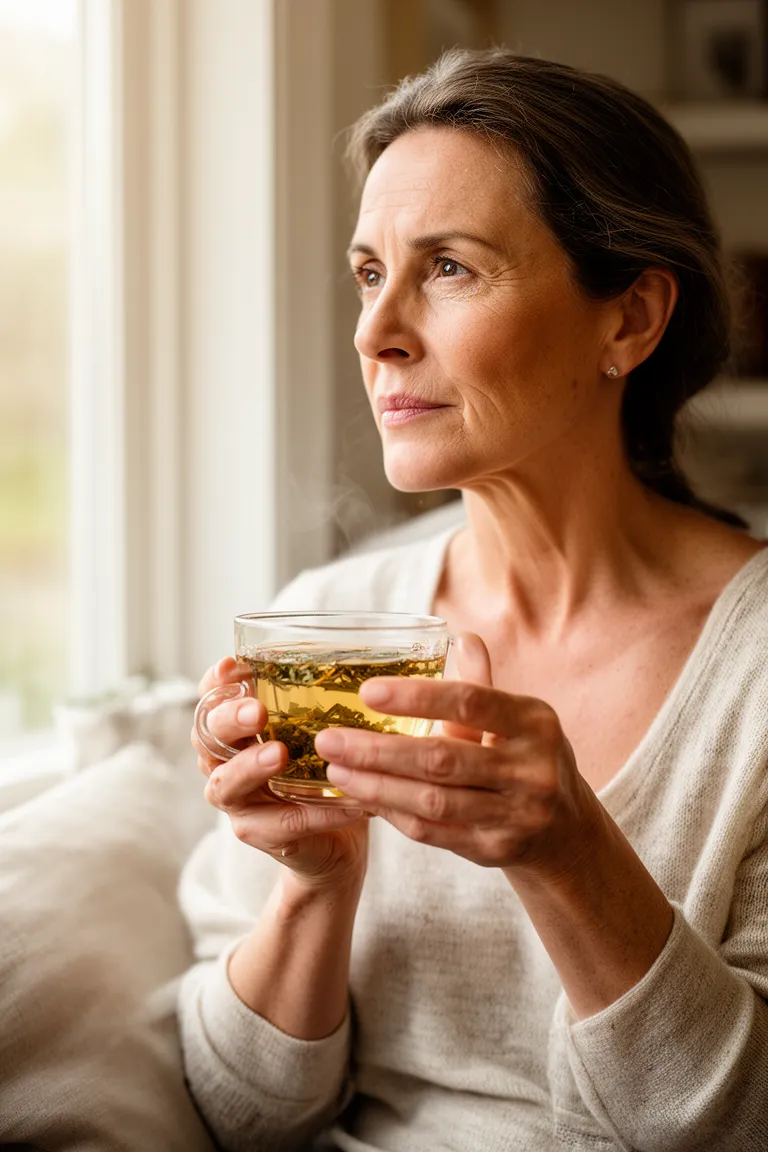
I remember the exact moment it happened. I was scrolling through my camera roll, looking for a photo of my daughter from a few years back, when I landed on a selfie I’d taken at 42. I leaned in, my 48-year-old face staring back at me from the screen, and I felt a cold little pit in my stomach. It wasn’t about vanity, not really. It was about recognition. The woman in that photo looked rested. Her skin had a glow. The woman holding the phone now saw fine lines that had settled in like permanent guests, a dullness that no amount of concealer seemed to fix, and a texture that just felt… tired. I felt like I was losing a part of myself I’d always taken quiet pride in—the part that felt vibrant and me.
So, I did what any modern, budget-conscious person would do. I became a discount detective. My evenings were spent in a ritual of typing “skinception anti aging discount code,” “best serum promo code,” and “luxury skincare on sale” into a dozen different tabs. My bathroom cabinet became a graveyard of half-used bottles—each one a monument to a fleeting hope and a 20% off coupon. I’d apply a new potion with the fervor of a believer, waiting for the miracle. But the glow would fade, the lines remained, and the only thing that truly deepened was my sense of frustration. I felt foolish. Was I just chasing marketing promises, wasting money on pretty packaging and clever names? That feeling of being a savvy shopper was completely hollowed out by the reality in the mirror.
Then, one afternoon, as I was about to click “checkout” on yet another “last chance” offer, I paused. My cart was full of magic bullets, but my spirit was empty. I asked myself a simple, terrifying question: What if the problem isn’t which product I’m buying, but what I’m not doing for my skin where it truly lives—inside my body? That question was the tiny crack that let the light in. It didn’t just change my skincare routine; it completely changed my relationship with my skin—and with myself. This is the story of how I stopped hunting for discounts and started building real health.
My Endless Hunt for the 'Perfect' Anti-Aging Discount Code
My journey into the discount jungle started with a single, seductive promise. An ad popped up for a serum that claimed to “reverse time” using “breakthrough peptides.” And right below the price, in cheerful green text: “Use code GLOW20.” It felt like a sign. I wasn’t splurging; I was being smart! That first purchase opened the floodgates. I joined Facebook groups and scoured Reddit threads, not just for deals, but for validation. I’d specifically search for skinception anti aging discount code reviews not working, and when I found them, I felt a weird sense of relief. “See,” I’d think, “it’s not just me. The product must be flawed.” Then I’d immediately start searching for the next one, the better one, convinced my holy grail was just one more promo code away.
The emotional investment was immense. Each sleek bottle that arrived felt like a new beginning. I’d cleanse my face with a sense of ceremony, apply the product, and stare in the mirror, willing a transformation. I expected my skin to look noticeably plumper, brighter, younger by morning—because the before-and-after photos promised exactly that. When it didn’t happen, the disappointment was personal. It wasn’t just a product failing; it felt like I was failing, like my skin was somehow defective for not responding to these scientific marvels. This cycle of hope, purchase, and quiet letdown became my normal. I was an anti aging routine for women who feel stuck, and I was stuck good.
Why My Skinception Anti-Aging Products Weren't Delivering (Even With a Discount)
After a year of this, surrounded by expensive clutter, I had a closet full of hope and a face full of frustration. I decided to get forensic about it. I started reading past the marketing hype and into the actual science of skin biology. What I learned was a revelation that freed me from the cycle.
First, I learned about the skin barrier. Imagine your skin is a brick wall. The skin cells are the bricks, and lipids (fats) are the mortar holding them together. This wall keeps moisture in and irritants out. I was bombarding my “wall” with a different active ingredient from a different discount brand every night—retinol one night, a fierce acid the next, a “revolutionary” peptide complex the night after. I was essentially throwing different powerful chemicals at my bricks, weakening the mortar, and creating tiny cracks. This led to chronic, low-grade inflammation—which is, ironically, one of the primary drivers of aging. I was potentially accelerating the very process I was trying to stop.
The second, bigger truth was about scope. Topical skincare is brilliant for the top layers. It can hydrate, exfoliate dead cells, and deliver antioxidants to fight daily damage. But it cannot send a signal deep into your dermis—the skin’s foundational layer—and command your fibroblasts to pump out new collagen. It cannot regulate the cortisol surging through your body during a stressful week. It cannot compensate for the cellular repair that only happens during deep, restorative sleep. I realized I was trying to fix the symptoms (dryness, lines) while completely ignoring the root causes raging inside my body. This was the core, biological reason behind why my anti aging cream isn't working at 48. No cream, no matter how discounted, could be a substitute for my lifestyle.
The Tipping Point: Realizing I Was Treating Symptoms, Not Causes
The penny didn’t just drop; it crashed through the floor. It happened during a brutal month at work. Deadlines were crushing, sleep was elusive, and my diet was coffee and stress. My skin looked awful—gray, papery, with every line etched deep. One night, in desperation, I applied a double dose of my most expensive, discounted “recovery” balm. The next morning, nothing. My skin still looked exhausted because I was exhausted.
That was my moment. My skin wasn’t a separate canvas I could just paint over. It was an outward-facing organ, a direct reflection of my internal state. It was shouting about my stress, my poor nutrition, and my sleep debt. I had been so busy listening to the advertisements that I’d stopped listening to my own body. This profound disconnect was the heart of my experience with anti aging products and disappointment. I was using sophisticated, external tools to fight a battle that was being lost internally. I had to stop looking for a hero in a bottle and start becoming the architect of my own skin’s health from the inside out.
The Real 'Secret' I Discovered Beyond Just Skincare Products
The secret, it turns out, isn’t secret. It’s foundational human biology. I shifted my entire focus from the pharmacy shelf to the pillars of health. This wasn’t about swapping one product for another; it was about changing my lens.
I dove into the gut-skin axis. I learned that about 70% of our immune system resides in our gut, and when it’s inflamed from poor diet or imbalance, that inflammation can manifest directly on our skin as redness, dullness, or breakouts. A happy gut microbiome became a skin-care goal.
I finally understood collagen. It’s not just a buzzword. It’s the literal scaffolding of our skin, and our body’s production of it slows dramatically as we age. Crucially, that production is fueled by specific nutrients (like Vitamin C, zinc, and amino acids), hampered by sugar, and commanded by quality sleep. You can’t “apply” robust scaffolding. You have to build it from within. Skin Anti-Aging and Moisturizing Effects of Low-Molecular-Weight Collagen Peptide...
This led me to explore natural anti aging solutions for women over 40, not as an alternative to science, but as its essential partner. Stress management moved from “nice to have” to non-negotiable. Why? Because cortisol, the primary stress hormone, tells your body to break down collagen and elastin for quick energy—it literally cannibalizes your skin’s support structure. This holistic view—connecting dots between food, sleep, stress, and skin—was the missing owner’s manual every single product page had omitted.
Integrating My New Routine: What Actually Made a Visible Difference
Knowledge is one thing; action is another. My new approach had two parts: simplifying the external and fortifying the internal.
The External Simplify: I did a ruthless cabinet purge. I kept a gentle, pH-balanced cleanser, a quality vitamin C serum for morning antioxidant protection, a medical-grade retinoid (which I introduced once a week, slowly building tolerance), and a rich, ceramide-based moisturizer. Sunscreen became my religion, rain or shine. That’s it. Consistency with these few, well-chosen actors was infinitely more powerful than the chaotic ensemble cast I had before.
The Internal Fortify: This is where the real work—and results—came from.
- Sleep as Therapy: I started guarding my 8 hours like my sanity depended on it. I created a wind-down ritual—no screens, herbal tea, reading—and within two weeks, the difference in my under-eyes was more dramatic than any eye cream had ever achieved. best intensive eye cream for deep wrinkles when you already use sunscreen and eat healthy
- Food as Fuel: I focused on “eating the rainbow” for antioxidants. I added a scoop of collagen peptides to my morning smoothie. I made a conscious effort to dramatically reduce sugar and processed foods, seeing them now as directly inflammatory.
- Movement as Medicine: My daily walk wasn’t just for steps; it was my moving meditation to clear stress. I also started a simple 10-minute morning yoga flow to connect breath and body.
- Stress as a Signal: Instead of ignoring my rising anxiety, I acknowledged it. A five-minute breathing exercise or even just stepping outside for fresh air became my circuit breaker.
The changes didn’t happen overnight. But within about six weeks, I noticed my skin felt different—more resilient, less reactive, plumper to the touch. Then, the mirror showed it: the stubborn dullness had lifted, replaced by a clarity I hadn’t seen in years. My complexion looked alive from within. The lines were still there—I’m 48, after all—but they looked softer, like well-earned laugh lines, not harsh etchings of stress. This was the tangible proof of the best anti aging alternatives when products fail.
Scientific Evidence
Navigating the Pathways: From Quick Fix to Foundational Health
One of the most confusing parts of my journey was figuring out how to start and what level of effort would yield what kind of result. I wished for a map. So, based on my experience and research, here’s a simple breakdown of different approaches to skin health, to help you see where you might fit.
| Approach | Best For | Realistic Timeline for Visible Change | Key Consideration |
|---|---|---|---|
| The Product-Only Path | Those with already strong health foundations who want targeted surface support. | 4-8 weeks for specific concerns (hydration, brightness). | Has a ceiling. Cannot address internal drivers of aging like stress or nutrient deficiencies. |
| The Lifestyle Foundation Path | Anyone feeling overwhelmed, wanting to start with the highest-impact, non-product changes. | 8-12 weeks for improved glow, reduced puffiness, better hydration. | This is the bedrock. Improvements here will make any topical products you *do* use work much better. |
| The Integrated Holistic Path | People, like me, who've tried products with limited success and are ready to address root causes. | 4-6 weeks for skin resilience and texture; 3+ months for softening of fine lines. | Requires patience and consistency across multiple life domains, but offers the most profound and sustainable results. |
| The Professional-Guided Path | Those with specific medical skin conditions, hormonal issues, or who desire clinical procedures. | Varies widely based on the treatment plan. | Essential for medical issues. A great dermatologist can be a partner in a holistic plan, offering prescriptions and procedures that work synergistically with your lifestyle. |
Seeing it laid out like this helped me understand that I had been stuck in the first box, expecting results from the third. It validated that my new integrated holistic path was the right, albeit more demanding, choice for the lasting change I wanted. when I changed my skincare routine my skin looked better
Letting Go of the "Magic Bullet" Mentality
Adopting this new way required a fundamental mindset shift. I had to mourn the fantasy of the single, perfect product. I stopped typing desperate queries like is skinception anti aging worth it or a scam into search bars. Instead, I started asking kinder, more constructive questions: “Is this habit supporting my skin’s health?” “Does this food feel like nourishment or inflammation?”
I had to forgive myself. For the money spent, for the time wasted chasing shiny objects. I reframed it not as a loss, but as tuition—the cost of learning what truly matters. I also made peace with aging as a natural process. The goal wasn’t to look 30 again; it was for my 48-year-old face to reflect a 48-year-old woman who was healthy, cared for, and vibrant. The pursuit of what to do when anti aging discounts don't help led me here: to a practice of self-care that felt sustainable and deeply respectful, rather than frantic and desperate.
My Journey from Discount Hunter to Confident Skin
Today, my bathroom shelf is serene. I have my few, trusted products. I might still use a subscription discount for my retinoid, but the frantic hunt is over. The packages in the mail no longer hold my hope hostage.
My confidence has undergone its own transformation. It no longer hinges on the next delivery or the next trend. It’s rooted in the quiet knowledge that I am consistently giving my body—and by extension, my skin—what it needs to thrive. The results are in the steady, undeniable glow that comes from within. They’re in the way my skin bounces back from a poor night’s sleep faster than before. They’re in the softness of my smile lines, which now tell a story of laughter, not just stress. how to reduce eye wrinkles naturally even though I sleep well
For anyone typing I tried skinception anti aging and still have wrinkles into the void, feeling that particular blend of hope and despair, I see you. I was you. My message is this: Look up from the shopping cart. The most powerful anti-aging technology isn’t for sale with a discount code. It’s built into your daily choices—the food on your fork, the quality of your sleep, the depth of your breath. Start there. Build from there. The glow that follows is the real deal.
Frequently Asked Questions
Q: How long did it really take for you to see results after changing your approach? I need realistic expectations.
A: I felt a subtle shift in how my skin felt—less tight, more supple—within a few weeks of improving my water intake and sleep. But the visual “wow” moments took patience. The dullness lifted noticeably around the 6-week mark. Seeing a genuine softening in fine lines and an improvement in overall firmness took a dedicated 3 months of consistent effort. True cellular renewal is a marathon, not a sprint.
Q: Do I have to buy expensive supplements and superfoods to make this work?
A: Not at all. The absolute foundation is real, whole food. Load up on colorful vegetables, berries, healthy fats, and lean protein. A simple collagen peptide powder was a helpful addition for me, but it’s not a magic wand. If you do explore supplements, prioritize quality. Look for transparent brands that offer third-party testing for purity and potency, and always check the actual dose per serving. They are called supplements for reason—they supplement a good diet, they don’t replace it.
Q: I’m completely overwhelmed. Where on earth do I start?
A: Please, just pick ONE thing. Do not try to overhaul your life overnight. For almost everyone, the single highest-impact change is sleep. Commit to 7-8 hours of quality sleep for two solid weeks. Observe your skin. Once that feels manageable, add one dietary shift—like swapping your afternoon snack for a handful of nuts and an apple, or adding one extra glass of water to your day. Small, sustainable steps create massive, lasting change.
Q: Should I just throw out all my current skincare products?
A: No! But you should audit them with a critical eye. Simplify to a core, gentle routine: cleanser, moisturizer, sunscreen (the ultimate anti-ager!), and maybe one or two actives (like vitamin C or retinol) that you research and use consistently. Ditch anything that stings, burns, or causes redness, and let go of the clutter. The mantra is: consistency with a few quality items beats sporadic use of a dozen.
Q: When is it time to see a dermatologist versus just doing this holistic approach?
A: A holistic approach is for optimizing overall skin health and aging gracefully. You should absolutely see a board-certified dermatologist for: diagnosing and treating medical conditions (like persistent acne, rosacea, eczema, or suspicious moles), for professional treatments (like lasers or chemical peels), and for prescription-strength options like tretinoin. Think of a derm as a specialist you consult to enhance or address specific issues within your broader wellness journey.
📌 Love this guide? Save it on Pinterest!
Pin Skincare Secrets 2026: What Really Works When Discount Codes Fail to your board so you can come back to it later.

